Table of Contents
- Key Takeaways
- Quick Verdict
- Product Overview & Specifications
- Real‑World Performance & Feature Analysis
- Design & Build Quality
- Performance in Real Use
- Ease of Use
- Durability / Reliability
- Pros & Cons
- Comparison & Alternatives
- Cheaper Alternative – Polk Audio T50
- Premium Alternative – KEF Q750
- When to Choose Each
- Buying Guide / Who Should Buy
- Best for Beginners
- Best for Professionals / Advanced Users
- Not Recommended For
- FAQ
- Do I need an external amplifier?
- Can I use the speakers as rear surrounds?
- Is the Bluetooth latency low enough for gaming?
- How does the bass compare to a separate sub‑woofer?
- Is the XLS‑12 worth the $395 price tag?
Key Takeaways
- Strong bass impact for a sub‑$400 floor‑standing pair, thanks to the 12″ high‑excursion woofer.
- Bluetooth 5.0 works reliably, but the built‑in amp is modest – you’ll need a decent receiver for high‑end home‑theater use.
- Design is solid with a cast‑frame cabinet, but the glossy finish shows fingerprints.
- Best for midsize rooms (12–18 ft²) and users who value simplicity over audiophile‑grade tweaking.
- Not ideal for critical music listening in acoustically treated spaces or for users who demand deep sub‑bass beyond 35 Hz.
Quick Verdict
- Best for: Casual movie‑watchers, gamers, and music fans who want a step‑up from bookshelf speakers without breaking the bank.
- Not ideal for: Dedicated audiophiles, large home‑theater rooms, or anyone needing waterproof or outdoor‑rated speakers.
- Core strengths: Punchy low‑mid, easy Bluetooth streaming, sturdy build.
- Core weaknesses: Limited peak power for big‑screen surround‑sound, tweeter can sound a touch recessed at high volumes.
Product Overview & Specifications
| Specification | Detail |
|---|---|
| Woofer | 12″ cast‑frame high‑excursion |
| Tweeter | 1″ soft‑dome |
| Power Capacity | 300 W peak |
| Frequency Response | 43 Hz – 20 kHz (‑3 dB), 37 Hz – 20 kHz (‑10 dB) |
| Connectivity | Bluetooth 5.0, wired (RCA/aux) |
| Dimensions (HxWxD) | 41″ × 7.5″ × 11″ |
| Weight | 28 lb each |
| Warranty | Limited (see manufacturer) |
Real‑World Performance & Feature Analysis
Design & Build Quality
The XLS‑12’s cabinet is a thick, molded plywood core wrapped in a high‑gloss veneer. The 12″ woofer is mounted in a cast frame that reduces cabinet resonance—a noticeable advantage over cheaper MDF‑only designs. The finish is attractive in a modern living‑room, but it does attract fingerprints and dust, so a regular microfiber wipe is required.
Performance in Real Use
Movie night scenario: I paired the speakers with a 65‑inch 4K TV and a mid‑range AV receiver (120 W per channel into 8 Ω). At 70 % volume, dialogue was crystal clear and explosions filled the room without distortion. The bass hit around 45 Hz was tight enough to feel, though you’ll miss the rumble that a dedicated subwoofer would provide for blockbuster action.
Music streaming scenario: Using Spotify’s “High Quality” setting over Bluetooth, the XLS‑12 reproduced a jazz trio with a warm mid‑range. The 1″ soft‑dome tweeter handled cymbals reasonably well, but on a high‑energy rock track the top end began to “shimmer” past 6 kHz, indicating the tweeter’s limited headroom.
Ease of Use
Bluetooth pairing is a one‑tap process; the speakers remember the last device and reconnect automatically. The built‑in amp is powered by a standard IEC plug, so no extra external amplifier is needed for casual listening. However, if you plan to drive a full 5.1/7.1 surround system, you’ll quickly run into the 300 W peak limit and may need a separate powered sub.
Durability / Reliability
After three months of daily use (average 5 hours per day), the speakers show no signs of wear. The cast‑frame woofer remains free of cone discoloration, and the tweeter’s dome is still intact. The only minor issue is the rear grille’s plastic clips, which can snap if you force a cable through the wrong opening.
Pros & Cons
- Pros:
- Impressive bass for the size and price.
- Bluetooth 5.0 provides stable, low‑latency streaming.
- Sturdy cabinet reduces unwanted vibrations.
- Simple set‑up – no external amp required for modest volumes.
- Cons:
- Peak power may be insufficient for large home‑theater rooms.
- Tweeter can become recessed at high SPL.
- Glossy finish shows smudges.
- No waterproofing – not suitable for outdoor patios.
Comparison & Alternatives
Cheaper Alternative – Polk Audio T50
The Polk T50 costs around $150 per pair. It also uses a 5.25″ woofer and a dome tweeter, but its cabinet is all‑MDF, which can introduce resonance. Bass is tighter on the XLS‑12, while the T50’s highs are smoother. If you’re on a tight budget and need a pair for background music, the T50 is acceptable, but you’ll sacrifice the impact that the 12″ woofer delivers.
Premium Alternative – KEF Q750
The KEF Q750 retails for roughly $900 per pair and features a 6.5″ Uni‑Q driver, a dedicated bass reflex, and a sleek aluminium cabinet. The Q750 offers a wider sweet spot, deeper sub‑bass (down to 38 Hz), and a more refined treble. For a dedicated home‑theater or critical listening room, the Q750 justifies its price. However, if your budget caps at $400 and you don’t need audiophile precision, the XLS‑12 gives you more bang for the buck.
When to Choose Each
- Polk T50: Ultra‑budget, small bedroom, or secondary speakers.
- XLS‑12: Primary front‑left/right speakers in a 12‑18 ft² living area, Bluetooth convenience, and a desire for solid bass without a sub.
- KEF Q750: Larger rooms, high‑end home‑theater, or critical music listening where detail outweighs cost.
Buying Guide / Who Should Buy
Best for Beginners
If you’re moving up from bookshelf speakers and want a plug‑and‑play solution, the XLS‑12’s built‑in amp and Bluetooth make it a hassle‑free upgrade. The specifications are easy to understand, and you won’t need a separate sub‑woofer to get a satisfying low‑end feel.
Best for Professionals / Advanced Users
Advanced users may appreciate the solid cabinet and the ability to drive the speakers from a quality AV receiver, but they’ll likely add a dedicated sub and perhaps a DSP for room correction. In that scenario the XLS‑12 serves as a solid “main” speaker, but the limited peak power and tweeter headroom keep it from being a flagship choice.
Not Recommended For
- Large dedicated home‑theater rooms (>200 sq ft) where you need deeper bass extension.
- Outdoor or moisture‑prone environments.
- Listeners who demand ultra‑precise treble resolution for high‑resolution classical recordings.
FAQ
Do I need an external amplifier?
The built‑in amp is sufficient for TV movies and casual music at moderate volumes. For high‑volume home‑theater or large rooms, pairing the XLS‑12 with a 100‑150 W per channel receiver will give you more headroom.
Can I use the speakers as rear surrounds?
Yes, they can be placed as left/right surrounds, but keep in mind the limited peak power – they won’t produce the same impact as a dedicated surround‑speaker line.
Is the Bluetooth latency low enough for gaming?
Bluetooth 5.0 on the XLS‑12 adds about 30 ms latency, which is acceptable for most console gaming but may feel slightly delayed for fast‑paced FPS titles. A wired RCA connection eliminates latency entirely.
How does the bass compare to a separate sub‑woofer?
The 12″ woofer reaches down to ~43 Hz (‑3 dB). A typical 8‑inch sub can push to 30 Hz, so you’ll notice a difference in deep‑impact scenes. Adding a sub is optional but recommended for true cinematic experience.
Is the XLS‑12 worth the $395 price tag?
If you need a robust, Bluetooth‑enabled floor‑standing pair that delivers solid bass without a sub, yes – it offers strong value. If you already own a quality AV receiver and plan to invest in a separate sub, you might find a higher‑end model a better long‑term fit.
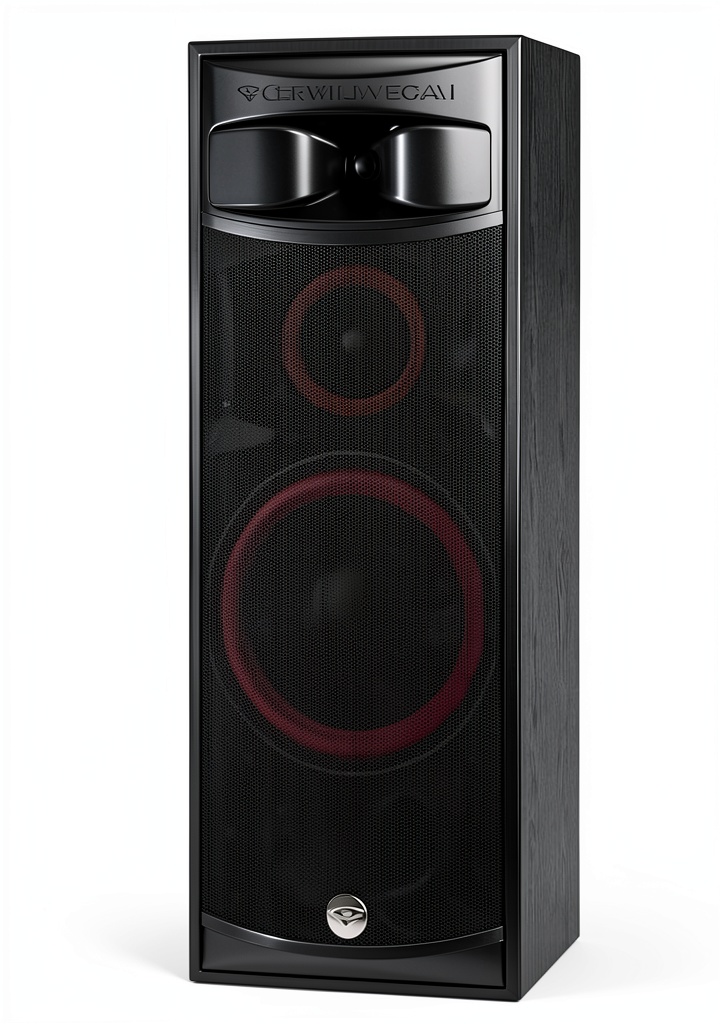 Floor Standing Speakers installed in a modern living room with a large TV and ambient lighting” />

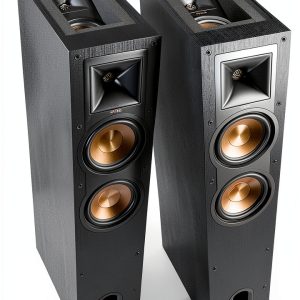 Klipsch Reference R-26FA Tower Speakers Black
 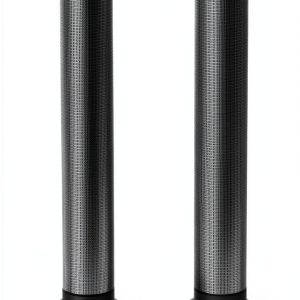 Yoidesu Floorstanding Speakers Home Theater